

- 14/05/2026
- Livwell Happier Minds
- Blog
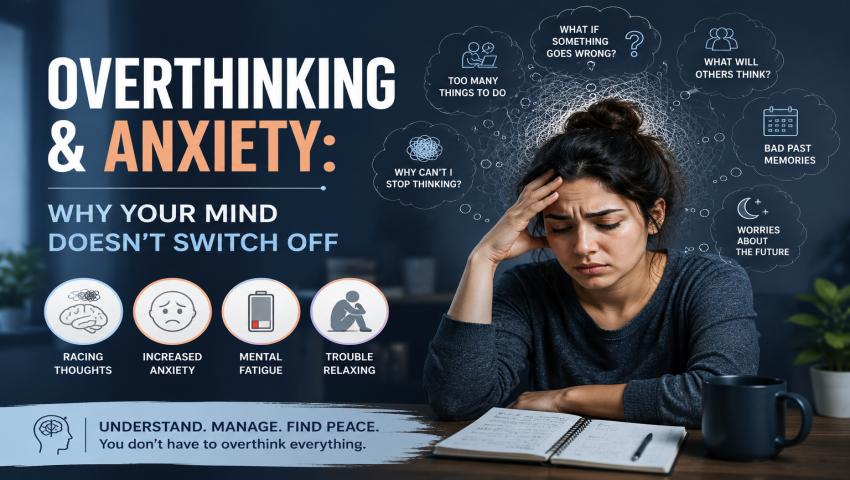
Overthinking & Anxiety: Why Your Mind Doesn’t Switch Off?
Overthinking & Anxiety are very common problems today. Many people say, “My mind just doesn’t stop.” Thoughts keep coming again and again, especially at night or during quiet time. This can feel very tiring and stressful. As a psychiatrist in Pune, Dr. Pratibha Bezwada, known as the Best psychiatrist in Hinjewadi, often sees patients who struggle with this issue in daily life.
What is Overthinking?
Overthinking means thinking too much about the same situation. You may replay past events or worry too much about the future. Small problems can feel very big. Your mind keeps analysing everything again and again without reaching a clear solution. Many people who experience these symptoms also seek Depression Treatment in Pune to improve their mental well-being.
This habit is closely linked with anxiety. When anxiety increases, overthinking also increases. It becomes a cycle that is hard to break.
Why Your Mind Doesn’t Switch Off?
There are many reasons why your mind stays active all the time:
- Fear of Uncertainty: Many people feel uncomfortable with uncertainty. They try to control every outcome by thinking more. But this only increases stress.
- Need for Perfection: Some individuals want everything to be perfect. They keep analysing their actions and decisions. This leads to mental exhaustion.
- Past Experiences: Negative past experiences can make the brain alert all the time. The mind tries to avoid future mistakes by overthinking.
- High Stress Levels: Work pressure, relationship issues, and personal responsibilities can increase stress. This makes it difficult for the mind to relax.
- Anxiety Disorders: In some cases, overthinking is part of an anxiety disorder. The brain stays in a constant “alert mode.”
Common Symptoms of Overthinking & Anxiety:
Patients often report:
- Constant worrying thoughts
- Difficulty in sleeping
- Trouble focusing on work
- Feeling mentally tired all the time
- Replaying past conversations
- Fear of making wrong decisions
If these symptoms continue for a long time, they can affect your mental health and daily functioning.
How Overthinking Affects Your Life?
Overthinking is not just “thinking more.” It can impact many areas:
- Mental Health: Leads to anxiety and depression
- Sleep: Causes insomnia and disturbed sleep
- Work Performance: Reduces focus and productivity
- Relationships: Creates misunderstandings and stress
Many people feel stuck in their own thoughts. They want to stop but don’t know how.
Practical Ways to Calm Your Mind:
Managing overthinking takes time, but simple steps can help:
- Set “Thinking Time.”: Give yourself a fixed time to think about your worries. Outside that time, try to stay engaged in other activities.
- Focus on Present Moment: Practice mindfulness. Pay attention to what is happening now instead of worrying about the future.
- Limit Over-Analysis: Not every problem needs deep thinking. Learn to accept small uncertainties.
- Improve Sleep Routine: Avoid mobile use before sleep. Maintain a regular sleep schedule.
- Stay Physically Active: Exercise helps in reducing stress and calming the mind.
Role of Psychiatric Counselling:
When overthinking becomes severe, self-help may not be enough. Professional guidance is important. At Livwell Happier Minds Mental Health Centre and Day Care, Hinjewadi, Pune, Dr. Pratibha Bezwada provides expert psychiatric counselling.
Counselling helps you:
- Understand your thought patterns
- Learn practical coping techniques
- Reduce anxiety levels
- Improve emotional balance
It is a structured and supportive approach to regain control over your mind.
When to Seek Help?
You should consult a psychiatrist if:
- Your thoughts feel uncontrollable
- Anxiety affects your daily life
- You have frequent sleep problems
- You feel mentally exhausted most of the time
Early treatment can prevent long-term mental health issues.
Final Thoughts:
Overthinking and anxiety can make your mind feel like it never switches off. But this condition is manageable with the right support and guidance. You do not have to struggle alone.
At Livwell Happier Minds Mental Health Centre and Day Care, Dr. Pratibha Bezwada focuses on helping patients find clarity, calmness, and emotional strength. Taking the first step towards mental health care can bring real and lasting change.