

- 09/04/2026
- Livwell Happier Minds
- Blog
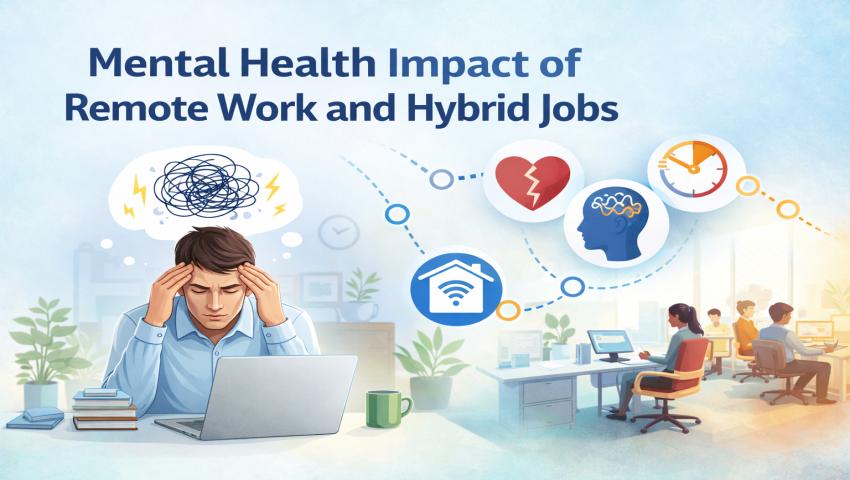
Mental Health Impact of Remote Work and Hybrid Jobs
In recent years, remote work and hybrid jobs have become very common. Many professionals in Pune, especially in the Pune IT sector, now work from home or follow a mixed work schedule.
While this change has given flexibility, it has also created new mental health challenges. As Dr. Pratibha Bezwada, I regularly see working professionals who feel mentally tired, emotionally drained, and disconnected from their routine. Many of them seek support for stress and anxiety treatment in Pune due to ongoing work pressure.
Why Remote Work Is Affecting Mental Health?
1. No Work-Life Balance:
When you work from home, there is no clear boundary between office and personal life. Your brain does not get a signal that “work time is over.”
For example:
many people keep checking emails even after dinner or before sleep. Slowly, your mind stays in “work mode” all the time.
This continuous mental engagement leads to stress and exhaustion, often requiring professional mental health support in Pune.
2. Increased Screen Time:
Remote jobs require long hours on laptops, mobiles, and video calls.
Continuous screen exposure affects your brain in two ways:
- It causes mental fatigue, making you feel tired even without physical work
- It reduces your ability to relax, especially in the evening
Over time, this leads to headaches, eye strain, and poor concentration.
3. Social Isolation:
Humans are social by nature. In office environments, small conversations, team discussions, and casual interactions help reduce stress.
In remote work, this social connection is missing. Even though you are working, you may feel emotionally disconnected.
This loneliness slowly builds up and can lead to low mood and lack of motivation, which may later need depression treatment in Pune if ignored.
4. Work Pressure Feels Constant:
In the office, you leave your workplace and mentally disconnect. But at home, your workspace is always in front of you. Because of this, many people feel like they are “always on duty.”
There is pressure to respond quickly to messages and emails at any time. This creates a feeling of constant pressure, which can lead to burnout and anxiety issues.
5. Lack of Routine:
A structured routine is very important for mental stability.
In remote work, people often:
- Wake up late
- Skip breakfast
- Work irregular hours
- Sleep late
This irregular pattern disturbs your biological clock, affecting mood, energy, and sleep quality. In many cases, this also leads to sleep problems and insomnia treatment needs in Pune.
Common Mental Health Problems in Remote Workers:
1. Anxiety:
Anxiety in remote workers is often related to performance pressure. People may constantly think:
“Am I doing enough work?”
“Will my manager think I am not active?”
This leads to overthinking, restlessness, and difficulty relaxing even after work.

2. Depression:
When isolation, stress, and lack of routine combine, it can lead to depression. You may start feeling:
- Disconnected from people
- Less interested in things you earlier enjoyed
- Low energy throughout the day
These symptoms should not be ignored.

3. Burnout:
Burnout is not just tiredness. It is a state of complete mental and emotional exhaustion.
You may feel:
- No motivation to work
- Mentally drained even after rest
- Frustrated with small tasks
This happens when stress continues for a long time without a proper break.

4. Sleep Problems:
Many remote workers use screens till late at night. This keeps the brain active and delays sleep. Also, irregular routines disturb natural sleep timing.
As a result, people face:
- Difficulty falling asleep
- Light sleep
- Waking up tired

Simple Tips to Protect Your Mental Health:
1. Create a Fixed Routine:
A structured day gives stability to your mind.
Try to:
- Wake up at the same time daily
- Start and end work at fixed hours
- Take lunch at a proper time
This helps your brain feel organised and less stressed.
2. Set Work Boundaries:
You must clearly separate work time and personal time.
For example:
- Avoid checking emails after work hours
- Do not keep work notifications on all the time
This gives your brain time to relax and recover.
3. Take Regular Breaks:
Working continuously reduces focus and increases stress.
Short breaks help your brain reset. Even a 10-minute walk or stretching can improve your mood and productivity.
4. Stay Connected:
Even if you work from home, stay socially active.
Talk to:
- Friends
- Family
- Colleagues
Regular communication improves emotional well-being.
When Should You Seek Professional Help?
If these symptoms continue for more than 2–3 weeks, it is important to consult a specialist. Many people delay help, thinking it is “just stress.” But untreated stress can become anxiety or depression.
How Dr. Pratibha Bezwada Can Help?
At Livwell Happier Minds Mental Health Centre & Day Care, Hinjewadi, Pune, I provide structured and personalised care for working professionals.
My approach focuses on:
- Understanding your daily routine and stress triggers
- Providing practical counselling for real-life situations
- Helping you rebuild a healthy routine
- Treating anxiety, depression, or sleep problems if present
With 19+ years of experience, I ensure that treatment is simple, effective, and comfortable for the patient.
Final Thoughts:
Remote and hybrid jobs are here to stay. But your mental health should not suffer because of your work style. Small daily changes can make a big difference. And if needed, professional support can help you regain balance.
If you are feeling mentally tired, stressed, or emotionally low, do not ignore it. Visit Livwell Happier Minds Mental Health Centre, Hinjewadi, Pune.
Dr. Pratibha Bezwada, I am here to support you towards better mental health and a balanced life.