
- 23/03/2026
- Livwell Happier Minds
- Blog
How Social Media Affects Your Mood And Mental Health in 2026?
Hello everyone. I am Dr. Pratibha Bezwada. Over my two decades of clinical practice, I have witnessed the human psyche navigate numerous cultural and technological shifts. However, as we move through 2026, we are facing a psychological landscape unlike any other. In a bustling IT and residential hub like Hinjewadi, Pune, my patients, ranging from high-performing software engineers to school-going children, are living in a state of “perpetual connectivity.”
Today, social media is no longer a tool we use; it is an environment we inhabit. But as a psychiatrist, I must ask: Is this environment fostering your growth, or is it quietly eroding your mental resilience? In 2026, the arrival of hyper-realistic AI influencers, 24/7 algorithmic surveillance, and the “gamification” of social status has fundamentally altered our brain chemistry.
In this blog, I want to walk you through the subtle ways your digital life is impacting your mood and provide a roadmap to reclaiming your mental peace.
1. The Dopamine Trap: The Science of the "Infinite Scroll."
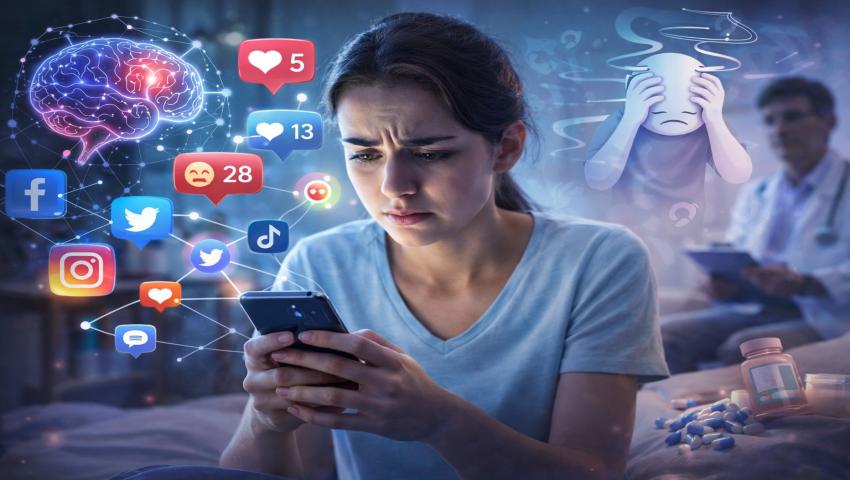
In 2026, algorithms are no longer just guessing what you like; they are predicting your emotional vulnerabilities. Every time you receive a notification, a “Like,” or a share, your brain releases a surge of dopamine, the neurotransmitter associated with pleasure and reward.
The danger lies in the “variable reward” system. Because you don’t know when the next hit of validation will come, you keep scrolling. At Livwell Happier Minds, I see many patients suffering from “Digital Burnout.” When the screen goes dark, your dopamine levels crash below their baseline. This leads to:
- Chronic irritability and “unexplained” mood swings.
- A diminished ability to enjoy real-world pleasures (like a sunset or a meal).
- A restless “brain fog” that makes deep work nearly impossible.
2. The "Comparison Pandemic" and the Death of Contentment:
We used to compare ourselves to movie stars on billboards. In 2026, we compare our raw, unfiltered lives to the AI-enhanced, highly curated “perfection” of our peers. This constant upward social comparison is a primary driver of Depression and Body Dysmorphic Disorder.
When you spend four hours a day looking at people who seem to have better jobs, better bodies, and better vacations, your subconscious mind begins to register your own reality as a failure. I often tell my patients in Hinjewadi: “You are comparing your messy ‘behind-the-scenes’ with someone else’s digitally polished ‘highlight reel.’” This gap between reality and the digital facade is where anxiety breeds.
3. FOMO 2.0: The Anxiety of Virtual Exclusion:
The Fear of Missing Out (FOMO) has evolved. In 2026, with real-time haptic updates and immersive stories, the feeling of being “left out” is visceral. Seeing a group of friends at a café in Balewadi High Street while you are working late creates a physical stress response.
This constant state of “High Cortisol” (the stress hormone) keeps your nervous system in a “fight or flight” mode. Over time, this results in:
- Persistent generalized anxiety.
- Sleep disturbances and night terrors.
- A sense of social isolation, even when you are “connected” to thousands of people online.
4. The Blue Light Saboteur: Why Pune is Losing Sleep?
At my daycare center, Livwell Happier Minds, sleep disorders are the most common complaint I treat. The “Blue Light” emitted by modern smartphones mimics daylight, suppressing melatonin production.
But in 2026, it’s more than just light; it’s “Revenge Bedtime Procrastination.” We scroll late into the night to reclaim a sense of freedom we felt we lost during a busy workday. This lack of REM sleep prevents your brain from processing emotions, making you emotionally fragile and prone to outbursts the following day.
Practical Steps: Practicing "Digital Hygiene" in 2026
1. The "Golden Hour" Rule:
Do not touch your phone for the first 60 minutes after waking up. Let your brain set its own tone for the day before the world’s opinions rush in.
2. Audit Your Emotional Intake:
Once a week, go through your "Following" list. If an account consistently makes you feel inadequate, envious, or angry, unfollow or mute them. Your feed should be a source of education or genuine inspiration, not a source of stress.
3. The "Hinjewadi Tech-Detox":
Take a 20-minute walk in a park or a quiet lane every evening. Leave your phone at home. Reconnect with the sounds of birds, the wind, and your own thoughts.
4. Physical Connectivity:
Replace one "comment" with a phone call. Replace one "DM" with a face-to-face coffee meeting. Human touch and eye contact provide a level of emotional regulation that a screen never can.
About Livwell Happier Minds Mental Health and Daycare Center:
If you find that your digital habits are causing you significant distress, if you feel trapped in a cycle of anxiety, low mood, or sleep loss, please know that help is nearby.
At Livwell Happier Minds, located conveniently in Hinjewadi, Pune, we specialize in helping the modern individual navigate the complexities of 2026. We offer a holistic approach to mental health, combining clinical psychiatry with empathetic counseling and daycare support for those needing a structured path to recovery.
Our Services: Mood Disorder Management, Anxiety & Stress Relief, Adolescent Counseling, Sleep Medicine, and Corporate Mental Wellness.
Conclusion:
You are more than a data point for an algorithm. Your value is not determined by how many people “double-tap” on your photo, but by the peace you feel within yourself. Let’s make 2026 the year we look up from our screens and back into our own lives.
Reader FAQs: Your Concerns Answered
Addiction is defined by “loss of control.” If you find yourself unable to stop scrolling even when you have urgent work, or if you feel physical distress (shaking, sweating, intense irritability) when your phone is taken away, these are signs of a clinical dependency that requires professional attention.
The brain is “plastic,” meaning it can change. Chronic overstimulation from social media can shrink the grey matter in parts of the brain responsible for emotional processing. However, the good news is that through therapy and “digital fasting,” the brain can heal and rebuild its focus and calm.
In 2026, social media is the primary “social playground.” Instead of a total ban, which can cause trauma and isolation, try “Collaborative Budgeting.” Sit with them and agree on “Screen-Free” hours for the whole family. If their grades or hygiene are slipping, bring them in for a gentle evaluation at Livwell Happier Minds.
It is highly effective. Even a 24-hour break allows your nervous system to reset from “sympathetic” (stress) to “parasympathetic” (rest) mode. Think of it as a “factory reset” for your mental health.